
MLS Laser Therapy for Joint, Nerve, and Spine Pain
A drug-free, non-invasive treatment — and how pairing it with PRP, bone marrow concentrate, and shockwave can amplify your recovery.
If you live with chronic joint, tendon, nerve, or spine pain, you have probably been handed the same short list of options: anti-inflammatories that wear off, a cortisone injection that helps for a while (and may weaken tissue over time), physical therapy, or eventually surgery. For many people, that list never fully solves the problem — and some of those options carry real downsides.
A Different Category of Care
Instead of masking pain or removing tissue, it works by changing the biology of the injured area: calming inflammation, improving circulation, and supporting your body’s own repair machinery. MLS laser therapy is one of the most accessible entry points into that approach, and when we combine it with regenerative treatments like platelet-rich plasma (PRP), bone marrow concentrate (BMC), and shockwave therapy, the result is often greater than any single treatment on its own.
Here is how it works, what the research actually shows, and why we so often use these tools together.
What is MLS Laser Therapy?
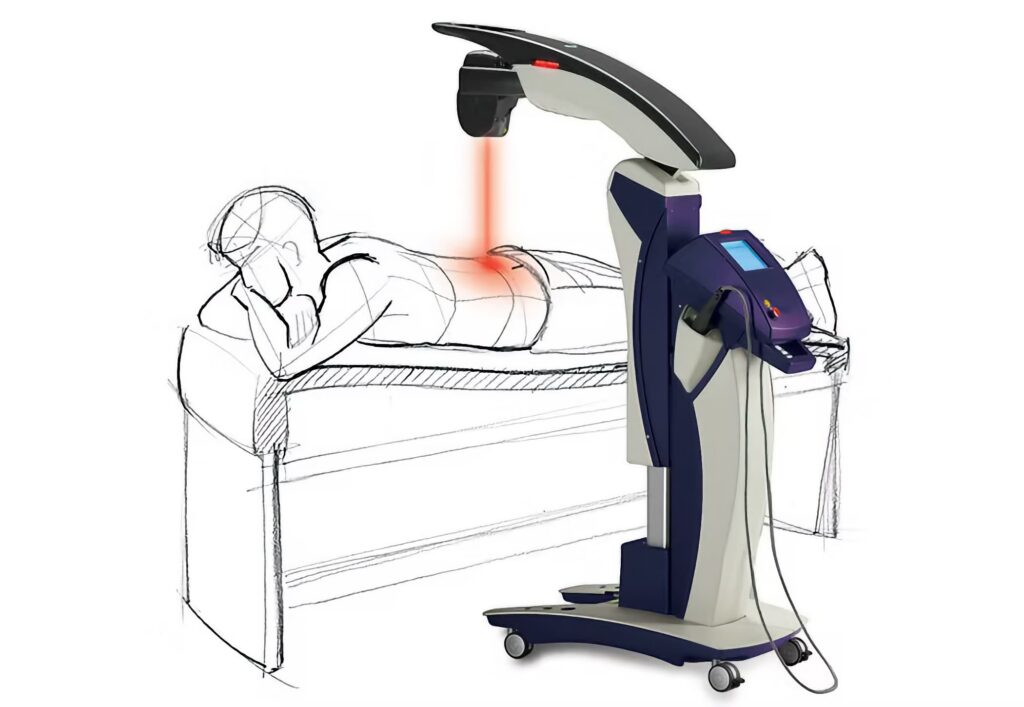
MLS stands for Multiwave Locked System — a type of Class IV therapeutic laser. What makes it distinctive is that it delivers two synchronized wavelengths of light at once: a continuous 808 nm beam, which is associated with anti-inflammatory and anti-swelling effects, and a pulsed 905 nm beam, associated with rapid pain relief. Locking these two emissions together in time is the core idea behind the technology and is meant to produce a more complete effect than either wavelength alone.
The underlying science is called photobiomodulation (PBM) — formerly known as low-level laser therapy. PBM uses specific wavelengths of red and near-infrared light (roughly 600–1000 nm) to stimulate cells without burning, cutting, or heating tissue to damaging levels. It is completely non-invasive, drug-free, and painless — most patients feel only a gentle warmth.
How it Actually Works
When near-infrared light reaches your tissues, it is absorbed by structures inside your cells — most importantly the mitochondria, the energy factories of the cell. This triggers a cascade of biological effects that have been documented in laboratory, animal, and human studies:
- More cellular energy (ATP). Light energy boosts mitochondrial output, giving cells more fuel to repair and regenerate.
- Less inflammation. PBM down-regulates inflammatory signaling and oxidative stress, two of the main drivers of chronic pain.
- Better circulation. It promotes vasodilation and the growth of new small blood vessels (angiogenesis), bringing more oxygen and nutrients to the injured area.
- Direct pain relief. It modulates how pain-carrying nerves fire, which is why many patients feel relief quickly.
- Faster tissue repair. It accelerates the activity of the cells that rebuild tendon, muscle, ligament, bone, and nerve.
In short: rather than simply quieting a symptom, MLS laser is designed to improve the environment in which healing happens.
Why Our MLS Laser is Different: Robotic Precision Dosing
Not all laser therapy is delivered the same way — and the difference matters. With a traditional handheld laser, a clinician moves the probe over the area by hand, so the dose your tissue actually receives depends on how fast the probe travels, how long it pauses in any one spot, and how steady the hand is. The result is almost always uneven: some areas get more energy than they need while others get too little, and no two sessions are quite alike.
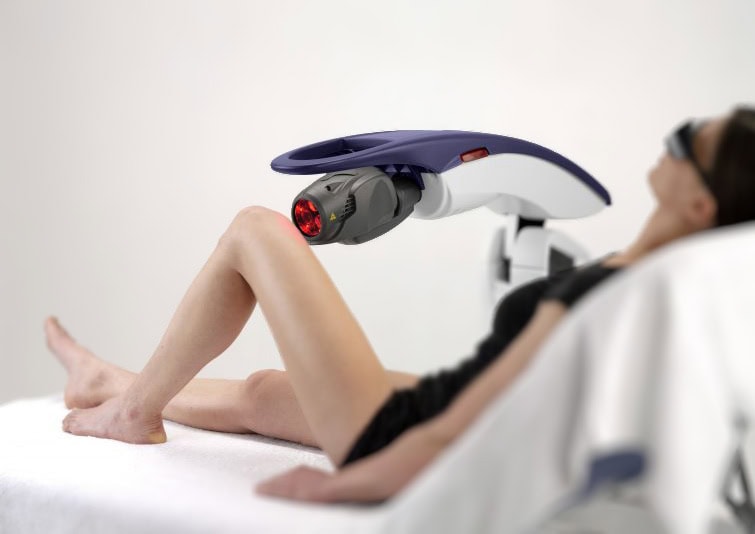
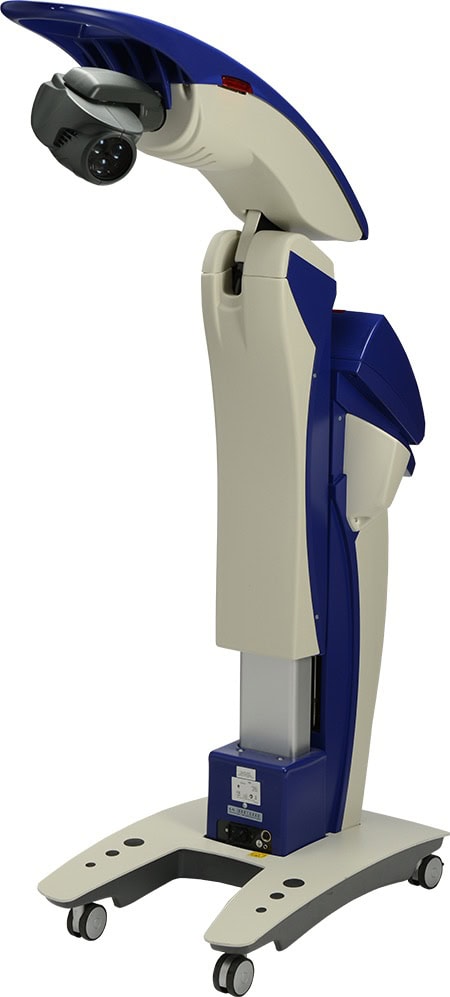
Our MLS system uses a robotic delivery head that automatically scans the entire treatment zone and distributes a precise, even therapeutic dose across all of it. That’s more important than it may sound, for a reason rooted in the biology above.
Photobiomodulation follows what researchers call a biphasic dose-response — the Arndt-Schulz curve. There is a therapeutic “sweet spot”: too little light produces no meaningful effect, and too much light can switch the benefit off rather than add to it. In fact, many of the disappointing laser studies in the medical literature are traced back to incorrect dosing, not to a failure of the therapy itself. Delivering the right dose, evenly, across the whole target is what separates a real treatment from a wasted session.
Robotic delivery is engineered to do exactly that:
- Even coverage — no hot or cold spots. The full treatment area receives the programmed dose, eliminating under-treated zones that get too little to respond and over-treated zones that overshoot the therapeutic window.
- Reproducible sessions, visit after visit. Because the protocol is programmed rather than freehand, your fifth session matches your first. That consistency lets us track your progress accurately and build on results over a course of care.
- Operator-independent reliability. Your treatment doesn’t hinge on who is holding the probe or how steady their hand is that day — the system delivers the same dose every time.
- Hands-free and efficient. The robotic head covers larger areas in a single, relaxed session, with nothing for you to do but rest.
The robotics aren’t a gimmick. They are how we make sure the right amount of healing light reaches all of the tissue that needs it — every single time.
What MLS Laser Can Help With
Musculoskeletal (joints, tendons, muscles, and bone)
- Knee, hip, shoulder, and other joint osteoarthritis
- Tendinopathies — tennis/golfer’s elbow, rotator cuff, patellar tendon, Achilles, gluteal tendons
- Plantar fasciitis and other foot/heel pain
- Muscle strains, ligament sprains, and bursitis
- Post-surgical recovery and bone-healing support
Nerve
- Peripheral neuropathy, including diabetic nerve pain
- Nerve-related pain and slow recovery after injury or surgery
- Carpal tunnel and other compression-related symptoms
- Pudendal neuralgia
- Dorsal penile neuralgia
Spine
- Chronic neck and low back pain
- Facet-joint and disc-related pain
- Nerve-root irritation (radiculopathy / “pinched nerve”) symptoms
What the Science Actually Says
We think it’s important to be straight with patients about evidence — so here is an honest summary rather than hype.
For musculoskeletal pain, the data are encouraging. A 2024 systematic review pooling 53 clinical trials and roughly 2,800 patients found that photobiomodulation reduced average pain scores by about 32% across conditions including knee osteoarthritis, tendinopathies, and low back pain.
For the spine, MLS specifically has been tested in placebo-controlled trials. In a 2024 double-blind randomized trial in chronic non-specific low back pain, MLS laser and a sham (fake) laser both helped initially — but at the one-month follow-up, the real MLS laser produced significantly greater pain relief than the placebo. A separate double-blind trial examined MLS for chronic neck pain. This is exactly the kind of rigorous evidence we like to see, and it’s a reminder that the durability of the benefit, not just the immediate effect, is what matters.
For nerves, the strongest human evidence is in neuropathic pain. A large body of laboratory and animal research shows that laser light can support nerve regeneration — more myelinated fibers, better-organized myelin, improved electrical conduction, and faster functional recovery. In people, the most robust clinical evidence to date is in diabetic peripheral neuropathy, where randomized trials have shown improvements in pain, nerve conduction, and nerve-related biomarkers. For post-injury or post-surgical nerve issues, we use MLS as a biologically-grounded adjunct — supporting the body’s repair process alongside the rest of your care, not as a stand-alone “cure.”
The honest bottom line: MLS laser is an almost zero-risk, non-invasive therapy with a growing evidence base. It is rarely a magic bullet by itself — and that is precisely why we often combine it with other regenerative tools.
What a Treatment Session is Like
A typical MLS laser session takes about 10–20 minutes. There are no needles, no incisions, and no downtime — you can drive yourself home and return to normal activity immediately. You simply relax while the robotic head moves over the treatment area automatically — there is nothing you need to do. Most people describe a soothing, mild warmth.
Because results build with repetition, laser is always delivered as a series of sessions — commonly 10-20 treatments total over a few weeks, then tapered. Sessions are performed by our trained clinical team under medical supervision, which keeps the therapy accessible and convenient.
You can view MLS laser therapy similar to a pool you want to dive into. You cannot really fully utilize the pool until it is completely filled with water. Similarly, MLS laser therapy requires multiple sessions to “fill the pool” with healing energy before we see full results.

Why We Combine MLS Laser with Regenerative Medicine
Here is the key insight behind how we practice. Each of these treatments attacks a different part of the healing equation. Used together, they can reinforce one another — what some researchers now call “bio-mechano-therapy.” Think of MLS laser as preparing and supporting the tissue environment, while the regenerative injections deliver concentrated repair signals directly to the source of the problem.
PRP is made from your own blood. We draw a small sample, spin it in a centrifuge to concentrate the platelets, and inject that platelet-rich layer precisely into the injured joint, tendon, or ligament. Platelets release growth factors that recruit healing cells and stimulate repair.
The evidence for PRP is among the strongest in regenerative medicine. In knee osteoarthritis, multiple meta-analyses — including one pooling 15 double-blind randomized trials and 1,632 patients — found that PRP delivered greater and longer-lasting improvement in pain and function than hyaluronic acid ("gel") injections at 12 months, with benefits large enough to be clinically meaningful. Notably, outcomes are influenced by platelet concentration and preparation quality, which is one reason technique and experience matter.
Why combine? Laser's anti-inflammatory and circulation-boosting effects help create a more receptive environment for the growth factors PRP delivers, and laser can be used in the weeks afterward to support the repair process.
For more advanced joint degeneration or stubborn injuries, we may use bone marrow concentrate. We draw marrow (typically from the back of the pelvis), concentrate it, and inject the patient's own cells and growth factors into the target area. BMC contains a richer mix of reparative cells and signaling molecules than PRP.
In head-to-head studies, BMC has matched or outperformed PRP for knee osteoarthritis. In one randomized comparison, the bone marrow group showed greater improvements in pain and function than PRP, and a separate study found sustained pain relief at two years (average pain score of 1.9 out of 10 with BMC versus 2.9 with PRP). Both BMC and PRP consistently outperform older hyaluronic acid injections.
Why combine? BMC delivers the most concentrated biological repair signal we offer; laser supports the tissue's metabolic activity and circulation so those cells can do their work.
Extracorporeal shockwave therapy uses focused acoustic pressure waves to mechanically stimulate healing — breaking up calcium deposits, triggering new blood-vessel formation, and "waking up" chronic, stalled injuries. Like laser, it is non-invasive.
The evidence is strongest for several common conditions. For plantar fasciitis, multiple meta-analyses show ESWT is more effective than placebo and competitive with other treatments, and it's also one of the best-studied non-surgical options for chronic tennis elbow. For calcific tendinitis of the shoulder, observational data suggest symptom resolution or significant improvement in up to 70% of patients who had failed conservative care.
The combination story is particularly compelling. In a randomized trial of athletes with patellar tendinopathy ("jumper's knee"), those who received shockwave after a PRP injection achieved faster pain relief than PRP alone, with no added side effects. Shockwave (a mechanical stimulus) and PRP/laser (biological stimuli) appear to work through complementary pathways.
Why combine? Shockwave provides a mechanical "jump-start" to chronic tissue, PRP or BMC delivers the biological building blocks, and laser supports the metabolic environment for repair — three different levers, one coordinated plan.
Is This Right For You?
These therapies are most appropriate for people who:
- Have chronic or stubborn joint, tendon, nerve, or spine pain
- Want to avoid or delay surgery, or aren’t a surgical candidate
- Prefer to limit reliance on anti-inflammatories, opioids, or repeated steroid injections
- Are looking for treatments that work with the body rather than against it
They are not right for everyone, and they are not a substitute for evaluating the actual cause of your pain. The most important step is an accurate diagnosis. In our practice, regenerative injections are physician-performed and guided in real time by ultrasound or fluoroscopy, so the treatment reaches the precise source of the problem — not just the general area.

FAQs
Not at all. There is ZERO pain. There are no needles and no incisions. Most patients feel only a gentle, soothing warmth.
None. You can return to your normal day immediately, including driving and work.
Some patients feel pain relief within the first few sessions; tissue-level healing builds over the full course of treatment. Recall, however, that for the full and lasting benefits, 10-20 sessions are needed, not just a single session.
MLS laser, PRP, BMC, and shockwave are generally not covered by insurance and are offered as out-of-pocket regenerative services. We'll review costs transparently during your consultation.
Because they work through different mechanisms. Laser supports the cellular environment, shockwave mechanically stimulates stalled tissue, and PRP or BMC delivers the biological building blocks of repair. For the right patient, combining them can produce better results than any one alone.
The Bottom Line
Chronic pain doesn’t have to mean a choice between living on medication and going under the knife. MLS laser therapy offers a safe, painless, non-invasive way to support healing — and when it’s thoughtfully combined with PRP, bone marrow concentrate, and shockwave therapy, you’re treating the problem from several angles at once.
The first step is understanding exactly what’s driving your pain and whether these tools can help.
Ready to find out if MLS laser care is right for you?
Request a consultation with our team. We’ll evaluate the source of your pain and build a personalized plan.
This article is for educational purposes. Individual results vary, and whether any of these therapies — alone or in combination — is appropriate for you can only be determined through an in-person evaluation with a qualified medical professional.
Selected research & references
- Photobiomodulation in musculoskeletal rehabilitation — systematic review (2024) — 53 trials, ~2,800 patients; ~32% average pain reduction. Sport Sciences for Health / Springer
- MLS Laser for chronic low back pain — double-blind, placebo-controlled RCT (Labanca et al., 2024) — MLS superior to sham at one month. J Back Musculoskeletal Rehabilitation
- MLS laser therapy — systematic review (text-mining of 211 studies, 1990–2024) — applications in MSK pain, neuropathic conditions, and wound care. PMC
- Photobiomodulation in peripheral nerve regeneration — systematic review — improved myelination, conduction, and functional recovery (largely preclinical). PMC
- Photobiomodulation for diabetic peripheral neuropathy — systematic review — benefits in neuropathic pain and nerve conduction. PubMed
- Shockwave vs laser for musculoskeletal disorders — systematic review & meta-analysis (2025). Lasers in Medical Science / Springer
- ESWT for plantar fasciitis — systematic review & meta-analysis (15 RCTs, 1,123 patients). Foot & Ankle Surgery / ScienceDirect
- PRP vs hyaluronic acid for knee osteoarthritis — meta-analysis of 15 double-blind RCTs (1,632 patients), 2025 — PRP superior at 12 months. Arthroscopy
- BMAC vs PRP vs HA for knee OA — randomized controlled trial (175 patients). PMC
- PRP or BMAC vs HA for knee OA — Level I systematic review & meta-analysis (27 studies, 2,396 patients). Arthroscopy / ScienceDirect
- PRP alone vs PRP + shockwave for patellar tendinopathy — randomized controlled trial (2024) — combination gave faster pain relief. PMC
- Biphasic dose-response (Arndt-Schulz curve) in photobiomodulation (Huang, Sharma, Carroll & Hamblin, 2011) — too little light has no effect and too much can negate the benefit; poor dosimetry explains many failed laser studies. The scientific basis for delivering an even, accurate dose. PMC